
Neuron partners with Jetvision to make Airsquitter flight tracking sensors Neuron-ready
The partnership combines Jetvision’s professional-grade aviation receivers with Neuron’s edge infrastructure, making it easier for users to share and sell data to customers, and track aircraft via the 4DSKY flight application.
Published: 1 August 2025 · Last edited: 6 August 2026

Neuron has partnered with Jetvision to make its Airsquitter flight tracking sensors ready to connect to the Neuron network.
Through the partnership, Jetvision Airsquitter owners can contribute aviation surveillance data to 4DSKY, the edge-native flight tracking network built using Neuron infrastructure. Participants can help expand the availability and resilience of real-time flight data while earning 4DSKY point rewards for their contribution.
Compatible Airsquitter bundles and the Neuron licence are now available through the Jetvision web shop.
Combining specialist flight tracking hardware with edge infrastructure
Jetvision has spent more than 13 years developing flight tracking receivers for aviation enthusiasts, airports, industrial operators and flight data services. Its hardware is designed to provide sensitive signal reception, accurate timing and reliable performance across demanding operational environments.
Neuron provides the edge network infrastructure that allows applications to connect directly to distributed devices and data sources. Rather than requiring all sensor data to be sent to a central server before it can be used, applications can access information closer to where it is generated.
The partnership brings these capabilities together. Jetvision provides the professional-grade receiver hardware, while Neuron provides the software and network infrastructure required to make the data available to applications such as 4DSKY.
This gives individuals and organisations a more straightforward route to deploying aviation surveillance infrastructure and contributing to a shared flight tracking network.
What does Neuron-ready mean?
Neuron-ready Airsquitter sensors are compatible with the Neuron software used to connect devices to the 4DSKY ecosystem.
The Neuron licence connects Jetvision Airsquitter systems to Neuron's coordination layer. Once activated and configured, the receiver can share data with any client system and connect to the 4DSKY flight tracking application and its range of products.
The integration reduces the work normally required to connect specialist flight tracking hardware to a distributed data network. Operators can begin with a proven receiver platform and a defined onboarding process rather than designing their own hardware and integration from the ground up.
Jetvision describes its Neuron-ready offering as an out-of-the-box route into the network, with Airsquitter bundles containing the principal equipment needed to get started. Installers need a suitable antenna mounting point, power and an internet connection.
Professional-grade aviation data
The Airsquitter is based on Jetvision’s established ADS-B receiver technology and supports ADS-B and multilateration, commonly known as MLAT.
Depending on the selected configuration, an Airsquitter can also receive FLARM or UAT signals alongside its primary aircraft surveillance channels. This allows operators to select hardware appropriate to the aircraft types, frequencies and surveillance technologies used in their region.
The receivers provide high-precision GPS time synchronisation, with connectivity available through Wi-Fi and Ethernet. Accurate time synchronisation is particularly important when observations from several geographically distributed sensors are combined for MLAT processing.
These capabilities allow the network to collect information from a diverse range of aircraft, potentially including:
- Commercial aircraft transmitting ADS-B or Mode S
- General aviation aircraft
- Gliders and light aircraft using FLARM
- Aircraft using UAT in supported regions
- Aircraft located through network-based MLAT
The availability of several surveillance technologies through one hardware platform can help operators build more complete and useful coverage of their local airspace.
Compatible with the 4DSKY flight application
4DSKY is an edge-native flight tracking network powered by professional-grade sensors with built-in edge computing capabilities.
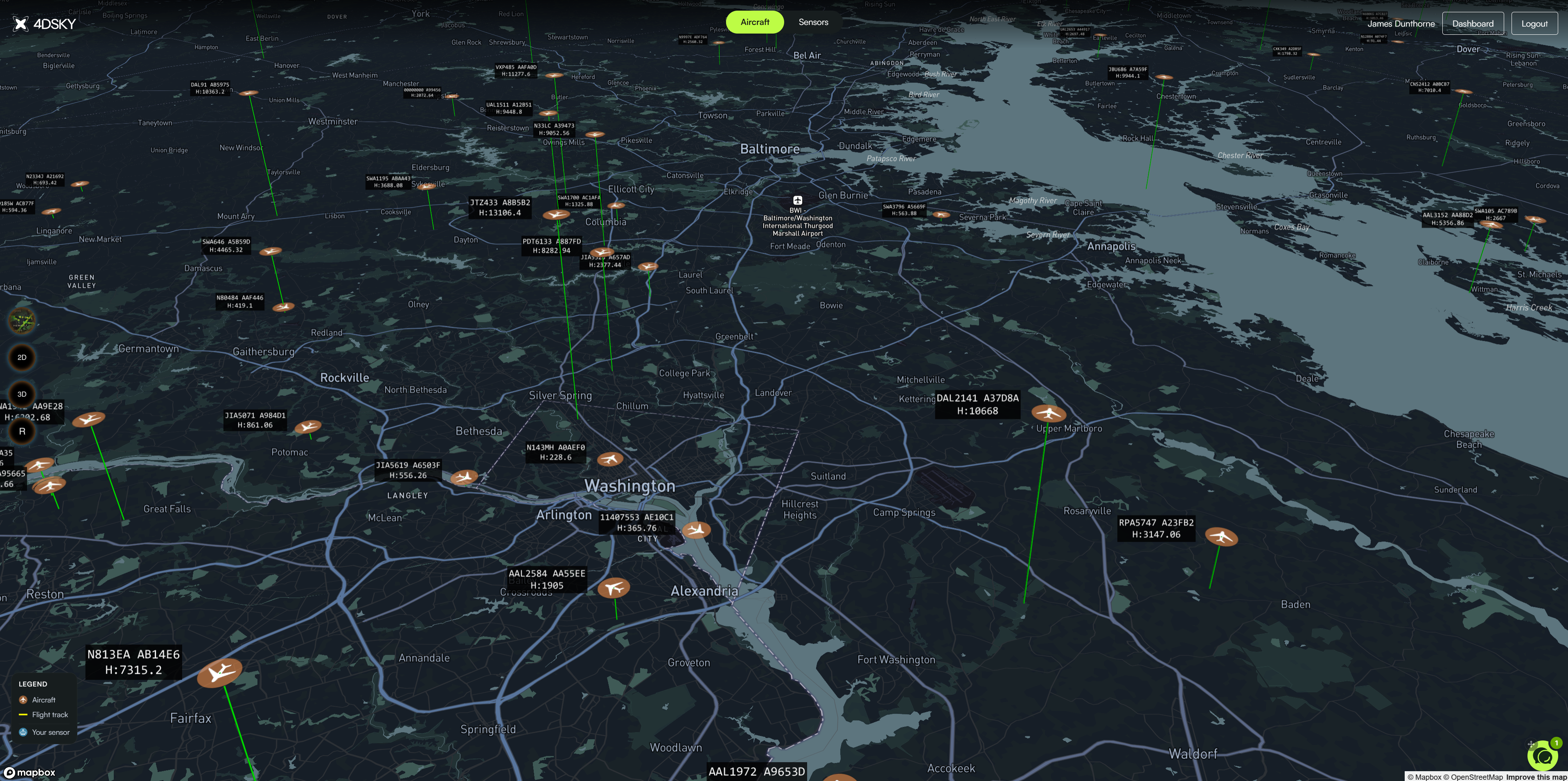
The network uses Neuron infrastructure to enable client software to connect directly to edge devices. This architecture is intended to reduce dependence on centralised data infrastructure and remove single points of failure from the delivery of real-time aviation data.
When a Jetvision Airsquitter is connected to 4DSKY, the sensor contributes the aircraft observations it receives from its local area. These observations become part of a wider distributed network that can support applications including:
- Live aircraft tracking
- Airport situational awareness
- Drone detect and avoid systems
- Beyond visual line of sight operations
- Uncrewed traffic management
- Air traffic management integrations
- Flight information displays
- Airspace analysis and coverage monitoring
The quality of a distributed flight tracking network depends on the number, location and reliability of its contributing sensors. Every well-positioned receiver can improve coverage, add redundancy and provide additional observations of aircraft operating within its range.
Contribute data and earn 4DSKY points
Sensor operators can earn 4DSKY point rewards for contributing data to the network.
The current reward system recognises factors including sensor uptime, signal quality and the uniqueness of the coverage provided. Operators can improve their contribution by installing the sensor in a suitable location, maximising antenna visibility and maintaining reliable power and internet connectivity.
A rooftop installation will often provide the strongest range, although an attic or another elevated location with good visibility of the sky may also be suitable.
The point system is intended to encourage participants to deploy reliable infrastructure where it provides the greatest value. Sensors that add new coverage to the network may contribute more than sensors installed in areas that already have several nearby receivers.
4DSKY currently recommends a minimum distance of approximately two kilometres between participating sensors where operators want to maximise the uniqueness of their coverage. Sensors can still be installed closer together, but overlapping coverage may affect the rewards available.
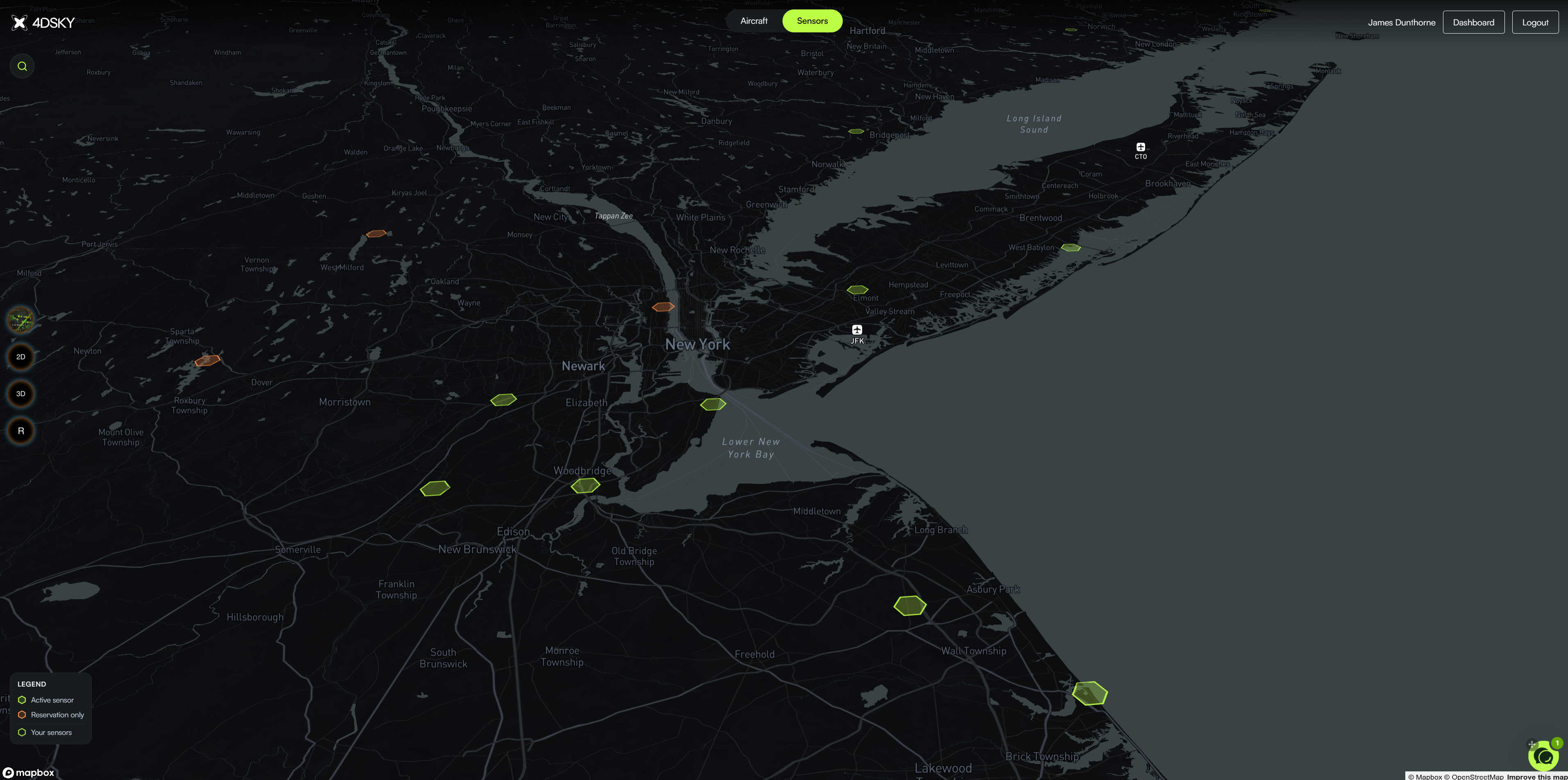
To check if your location is available you can check your hex by visiting:
and clicking "sensors" at the top of the page.
Airsquitter configurations for different regions
Jetvision offers several Neuron-ready Airsquitter bundles to support the different frequencies and aviation surveillance standards used around the world.
The available options include:
Airsquitter Basic
The basic configuration provides the core Jetvision flight tracking capability and is intended for worldwide use.
Airsquitter UAT
The UAT configuration adds support for 978 MHz Universal Access Transceiver signals and is intended primarily for the United States and other markets where UAT is used.
Airsquitter FLARM
FLARM configurations add support for aircraft using FLARM surveillance technology. Jetvision identifies these bundles as suitable for regions including Europe, Africa, Australia, New Zealand, Canada, Central America and South America, depending on the specific configuration selected.
Customers should confirm the surveillance technologies and frequencies used in their region before selecting a bundle. Jetvision provides separate FLARM and UAT options, so choosing the correct configuration is important.
Full bundle details are available from the Jetvision web shop.
Building a more open flight tracking network
Traditional flight tracking services frequently depend on centralised platforms that receive, process and redistribute data from large numbers of sensors.
Neuron takes a different approach. Its infrastructure allows applications to interact with distributed edge devices without requiring every interaction to pass through a single central intermediary.
For aviation applications, this approach can provide several advantages:
- Data can be processed closer to the sensor
- Applications can connect directly to participating edge infrastructure
- Networks can avoid relying on a single central point of failure
- Sensor operators can retain a more active role in how their infrastructure is used
- New applications can access a growing ecosystem of distributed aviation data
The partnership with Jetvision makes it easier to expand this infrastructure using hardware developed specifically for reliable flight tracking.
It also provides a foundation for future cooperation between the companies as Neuron and Jetvision continue to improve sensor performance, network coverage and access to aviation data.
Supporting the future of crewed and uncrewed aviation
Reliable, low-latency surveillance data will become increasingly important as drones, autonomous aircraft and conventional aviation share more complex airspace.
Applications such as detect and avoid, uncrewed traffic management and airport situational awareness need dependable information about nearby aircraft. Expanding the availability of distributed ground-based surveillance can help provide the coverage and resilience required to support these systems.
4DSKY is already being developed and tested through projects involving airports, drone operators, government organisations and aviation technology companies. Its sensor infrastructure has supported work relating to BVLOS operations, drone delivery routes, smart-city airspace and the integration of crewed and uncrewed aircraft.
By making Airsquitter sensors Neuron-ready, Neuron and Jetvision are giving more organisations and independent operators an opportunity to participate in that infrastructure.
Get started with a Neuron-ready Airsquitter
Users can join the network in three principal steps:
- Select a suitable Neuron-ready Jetvision Airsquitter bundle.
- Install and connect the sensor using the Neuron 4DSKY licence and onboarding process.
- Begin contributing flight data and earning 4DSKY points.
A suitable installation requires good visibility of the sky, a reliable internet connection, access to power and an appropriate mounting point for the antennas.
Visit the Jetvision web shop to view the available Airsquitter bundles and Neuron 4DSKY licence.
Visit 4DSKY to learn more about the network, create an account and start contributing aviation data.